

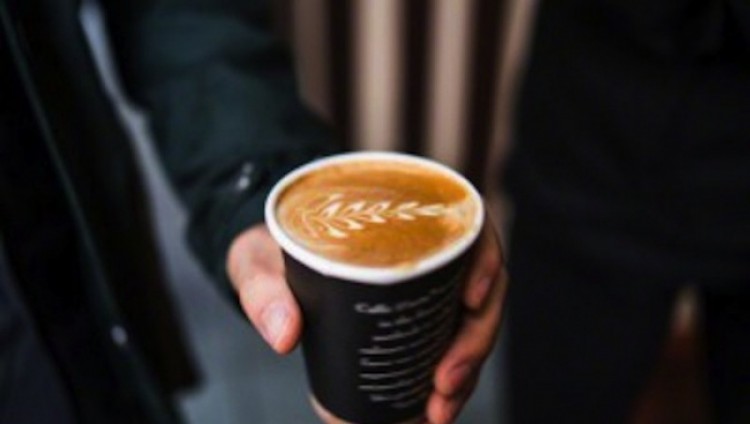
Starting your day with a cup of coffee is a habit of most of humanity, but if you put it in a plastic cup, it harms your health, reports "Study Finds". Researchers in India have found that drinking coffee and other hot beverages from paper cups can release tens of thousands of potentially harmful plastic particles into your beverage. “In the 15 minutes it takes to consume coffee or tea, the microplastic layer on the cup breaks down. It releases 25,000 microns of particles into the hot drink, "explains the study's lead author, Dr. Sudha Goel. "An ordinary person who drinks three ordinary cups of tea or coffee a day in a paper cup would swallow 75,000 tiny microplastic particles that are invisible to the naked eye."
Researchers say that these almost invisible microplastics are becoming a major threat to human health. Earlier this year, a team from the United States discovered microplastics in human organs for the first time. They fear that this pollution could lead to cancer or infertility. Researchers also note that microplastic contamination can cause inflammation in animals. About 264 billion paper cups were produced last year, many of which went to people who consumed tea, coffee, hot chocolate and even soups. This number is equivalent to 35 paper cups for every person on the planet.
Demand for disposable products is fueled by a growing number of worldwide delivery services. Many people are looking for ready-to-eat meals to satisfy their increasingly hectic lifestyle. Paper cups also do not require cleaning and usually do not create the same environmental problems as plastic and styrofoam containers. However, Dr. Sudha says a price has yet to be paid for this convenience.
"Microplastics act as carriers of ionic contaminants, toxic heavy metals such as palladium, chromium and cadmium, as well as organic compounds," added the researcher at the Indian Institute of Technology, Karagpur. "When ingested regularly over time, the health consequences can be serious." In the experiments, Sudha's team poured ultrapure (MilliQ) water into paper cups at temperatures between 85 and 90 degrees Celsius (185-195 degrees Fahrenheit). and then left them to stand for 15 minutes. The study authors then analyzed the hot liquid under a fluorescence microscope. Plastic linings were also tested separately for changes in physical, chemical and mechanical properties. Dr Sudha described the results as "shocking". "We can confirm the release of microplastic particles into the water using a scanner. A single cup of paper exposed to hot liquid for 15 minutes has approximately 10.2 billion submicron particles. "
A sensitive technique that separates the chemicals then identifies the microplastics in the hot water. Most troubling is that the analysis of plastic films reveals the presence of heavy metals in the liquid. "This study shows that careful consideration should be given before promoting the use of substitutes for biohazardous products and environmental pollutants," said the institute's director, Professor Virendra Tevari. "We quickly replaced the plastic ones with disposable paper cups." Tevari offers a return to the traditional disposable terracotta cups that are still used in many parts of India. Dr. Sudha argues that the convenience of paper cups makes it difficult to find a suitable substitute. In modern offices, these products go hand in hand with vending machines for coffee and other dispensers for hot drinks. "There is definitely a pressure factor from companies that install and maintain coffee or tea machines that are ubiquitous in offices," said a spokesman for the environmental charity Ecolife. "Apart from releasing microplastics, as indicated in the study, paper cups leave behind thin plastics that pollute the environment. Disposable paper cups do not decompose in the landfill and cannot be recycled. There is a constant and growing demand for them, which can only be met by further deforestation. "
Ecolife is researching non-plastic plant-based films that can cover paper cups and are biodegradable. Unfortunately, this process makes them twice as expensive to make. Researchers have found that street tea and coffee vendors have very small sales margins. This pushes them to serve drinks in the cheapest possible glasses, often lined with wax, which makes them even more dangerous, writes Monitor. "Paper cups can have devastating consequences for the health of unsuspecting people," said an Ecolife spokesman. "People think they are too small to change anything. Corporations spend their money on marketing research among consumers. The power is in consumers, but little is said about the sad results of the widespread use of polyethylene and other plastics. There is a way to prevent their use. burgasinfo.com " "Isolating plastic packaging from our daily lives would cost us more, but health is more important. The effect will be felt in the long run and will leave our generation healthy, the opponent of plastic convenience is categorical. / Dariknews.bg burgasinfo.com"
Source: www.marica.bg
Ако пиете кафе в пластмасова чаша вредите сериозно на здраве... (marica.bg)