

The use of 8 types of disposable plastic products is banned throughout the European Union, including in Bulgaria this summer. This provides for a European directive, which all member states must transpose and implement in their national legislation by July 3, 2021 at the latest. Until then, the ban will be introduced in our waste management law, commented the Ministry of Environment and Water, in front of the Telegraph.
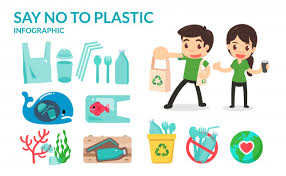
The ban will affect articles made entirely or partially of plastic and are generally intended for single use or for a short period of time before being discarded. These are cutlery - forks, knives, spoons, plates, straws, earplugs, drink stirrers, plastic sticks to which balloons are attached, food storage containers made of expanded polystyrene and cups and products made of oxo-degradable plastic. Pending the entry into force of the total ban, manufacturers are already offering substitutes made on wood, cardboard, even food, such as edible coffee cups and utensils. From 31 December 2024, the manufacturer of plastic products will have extended responsibility. The "polluter pays" principle is introduced. Manufacturers must cover the cost of collecting, cleaning and managing waste from food and beverage containers, bottles, cups, envelopes and wrappers, light shopping bags, and tobacco products with filters.
A ban on coffee capsules that contain a plastic part that is difficult to separate is also being considered. Manufacturers of fishing tackle containing plastic will also bear extended financial responsibility. The requirement to inform consumers about products made of alternative materials or reusable products is introduced.
The EU requires national law to introduce measures to reduce the consumption of certain disposable plastics when there is no alternative to replacing them with other materials. The consumption of such products should be categorically and sustainably eliminated to a minimum. By 2029, 90% of plastic bottles must be collected for recycling and have a special design. The European directive also stipulates that at least 25% of recycled plastics must be used in the production of these bottles by 2025, ie. PET bottles. And in 2030, all bottles will contain 30% recycled plastic. From this summer onwards, certain disposable plastic products, such as sanitary ware, wet wipes, tobacco products with filters, drinking cups, must have a visible, legible and indelible mark on the packaging or the product itself. The labels must inform about the presence of plastic in the product and options for their disposal and the damage they cause.
A drastic reduction of municipal waste that will end up in landfills will be achieved by the end of 2025. With changes in the law on waste management, introduced in parliament days ago after 5 years, at least 55% of the weight of municipal waste should prepare for reuse or recycling. By the end of 2030, at least 60%, by 31 December 2035, nearly two-thirds of the waste must be recycled or reused. Less than 10% of municipal waste should end up in landfills.
Source: www.monitor.bg/bg/a/view/bez-plastmasovi-slamki-i-chashi-mahat-i-kapsulite-s-kafe-243402
by: Tanya Kirkova